
Roading Reseal and Rehabilitation Programme 2026-2027
The Tararua District's reseals season is planned to kick off early October, and will run to March 2027 (subject to weather). We are chip sealing almost 60km of our sealed road network and will be working on 20 roads.
This work is being carried out by Tararua Alliance and our local contractors.
Resealing
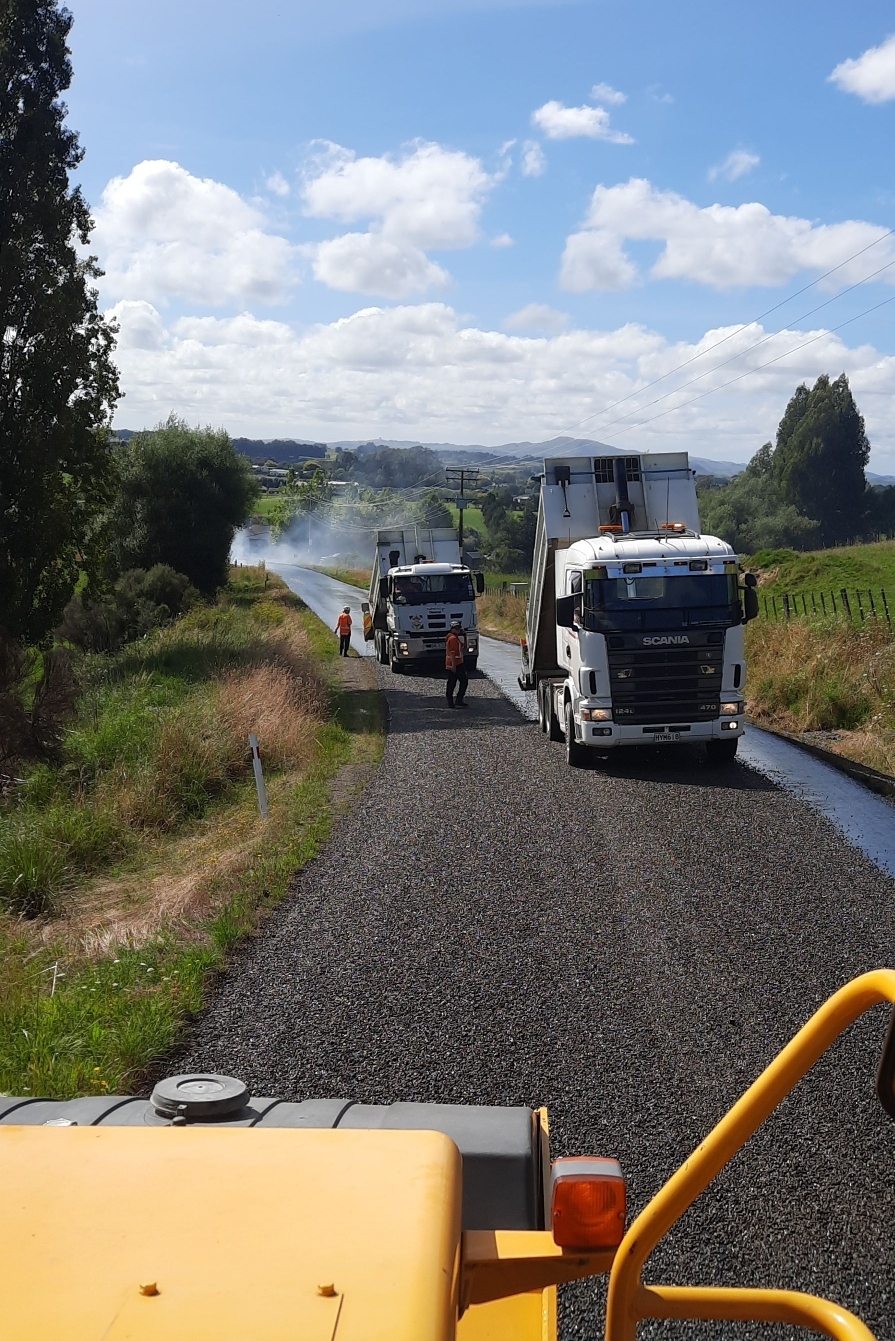
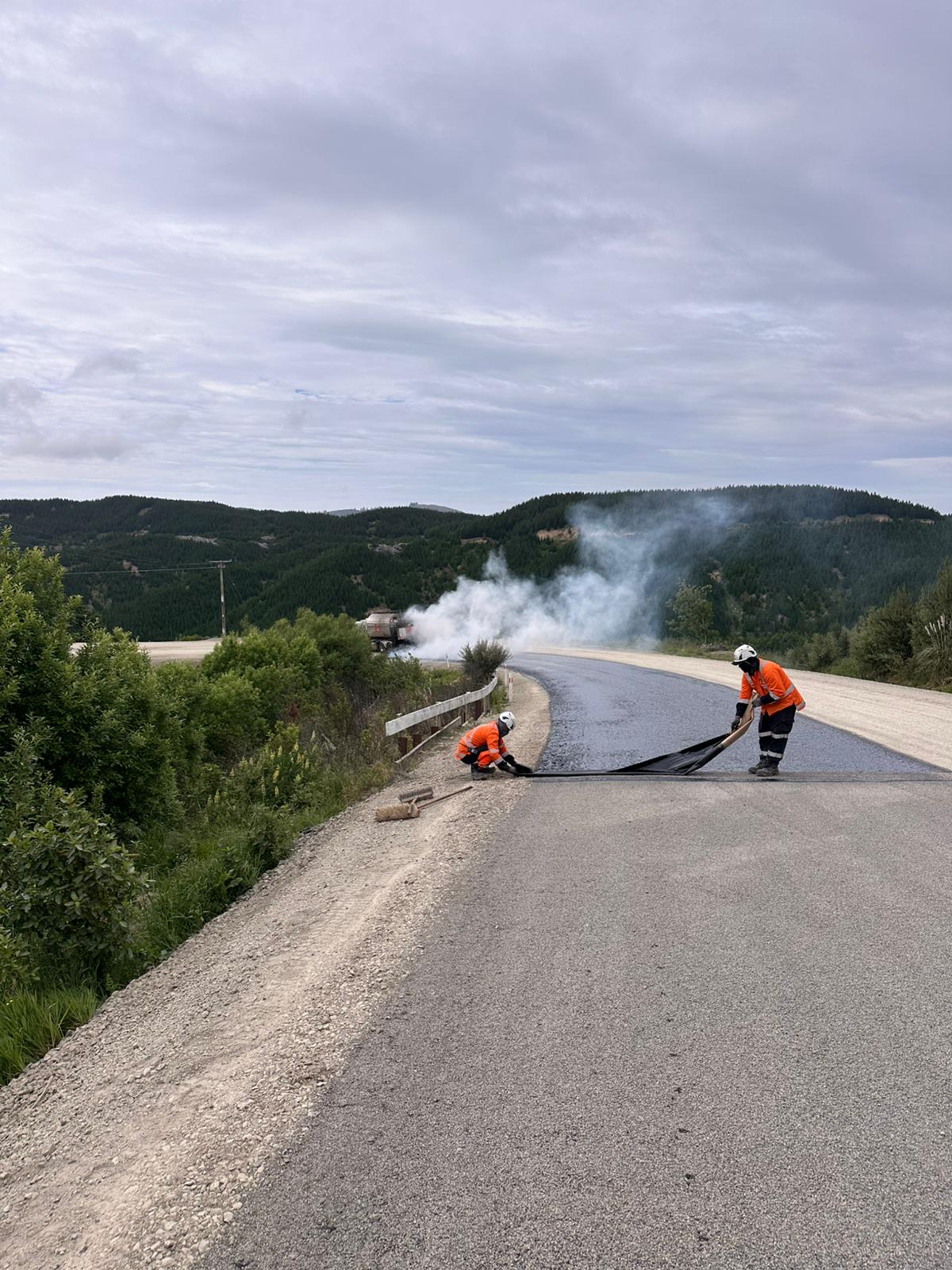
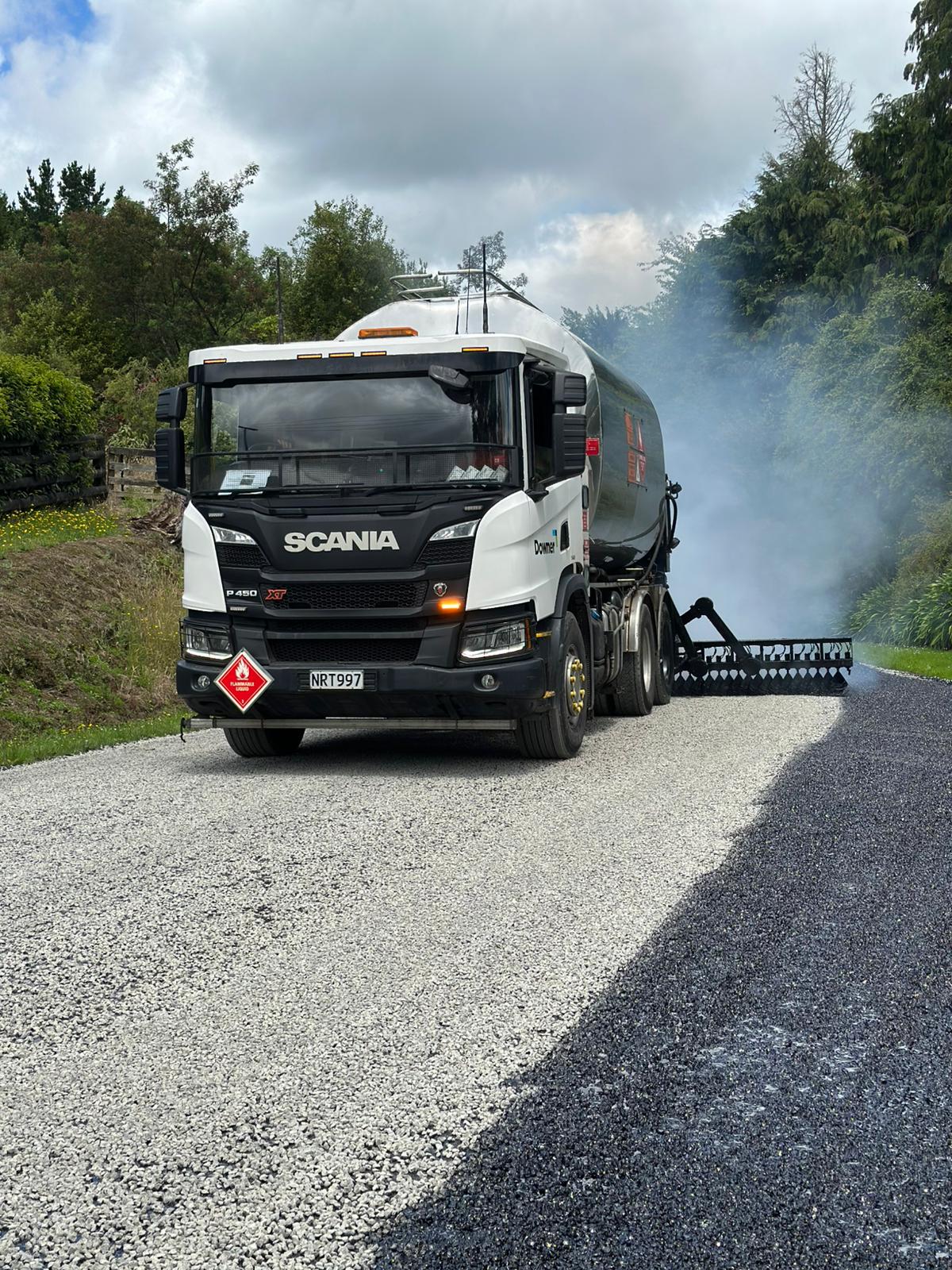
Like repainting a weather board house to protect the boards, chip seal resurfacing is a protective road surface treatment that extends the life of a road by keeping it watertight. Resealing improves road safety by adding texture and increasing traction. A thin layer of bitumen (a sticky black glue) is sprayed on the road and covered with small stones. Vehicles can drive through chip seal sites almost as soon as the chip is on the ground - this helps the chip bed into the glue.
The roading team will be working under Stop/Go with two road closures.
| Roads being sealed this season include: |
|---|
| Makomako Road |
| Pahiatua Track |
| Pahiatua-Mangahao Road |
| Ballance Valley Road (this will include a road closure with resident access only) |
| Gorge Road (this will include a road closure with resident access only) |
| Saddle Road |
| Woodlands Road |
| Piripiri Road |
| Weber Road |
| Guy Street |
| Oringi Road |
| Hopelands Road |
| Kumeroa Road |
| River Road, Woodville |
| Route 52, Section 93 (Pongaroa North) |
| Upper McLean Road |
| Route 52, Section 157 (Alfredton) |
| Pa Valley Road |
| Mangaone Valley Road |
| Mangaraupiu Road |
| Pahiatua-Pongaroa Road |
Road rehabilitation (rebuilding)
A road rehabilitation is a full-width rebuild of a road that has reached the end of its useful life. It is a major renewal treatment rather than a routine maintenance activity.
This can involve excavating worn-out pavement, installing or improving drainage, re-shaping the road, compacting new pavement materials and applying a new sealed surface.
| We are rebuilding seven sites on these roads: |
|---|
| Route 52, Section 109 (Pongaroa) |
| Top Grass Road - two sites |
| Tamaki River Road - two sites |
| Kumeroa Road |
| Ormondville Te Uri Road |
Why these roads?
Roads are selected for sealing or rehabilitation using condition assessments, traffic information and asset management planning. Different roads age at different rates depending on traffic volumes, construction history, environment and pavement condition.
Stay informed
- Weekly roading updates are published on Tararua District Council's Facebook page.
- Affected residents will receive a letter in the mailbox where works are expected to have a greater impact longer than one day.
- Traffic management arrangements may change depending on weather and site conditions
Contact
If you have any questions about this work, please contact Tararua Alliance on (06) 374 5341 or email enquiries@tararuaalliance.co.nz
FAQs
Chip seal is a protective road surface treatment that extends the life of a road and improves road safety by adding texture and increasing traction.A thin layer of bitumen (a sticky black glue) is sprayed on the road and covered with small stones. Vehicles can drive through chip seal sites - this helps the chip bed into the glue.
There are different types of road surfacing methods. Chip seal is used a lot in New Zealand especially on lower volume roads. Asphalt – the smoother, darker surface – is generally used for higher traffic roads.
We are using chip seal because it is economical, flexible and hard wearing.
Chip seal has been used in New Zealand since 1913. It’s still our most common road sealing treatment.
We need dry conditions and a temperature of at least 14 degrees to do this work, so the chip seal can set. If the weather looks too cold, wet or windy, we may need to postpone the work.
We monitor the surface condition of all Tararua roads and there are many factors that go into deciding which roads are sealed each year – from traffic volumes to surface wear and tear.
To drive safely through a chip seal site, slow down – 30km/hr is the golden speed. Too fast and you’ll rip up the road, too slow and the road will stick to you.
Pavement rehabilitation is a full-width upgrade of a road that’s reached the end of its life. This involves a comprehensive overhaul, digging out worn-out sections, installing or renewing drainage, road shaping, compacting and sealing. It’s like giving a road a full makeover, rather than a patch repair. If you have an old weatherboard house, you can only repaint and fix small sections so many times. Eventually, the boards wear out and need to be replaced. Roads are the same - after several rounds of minor repairs and resurfacing, the road gets to a point where it needs a more serious fix. That’s where a rehabilitation comes in, it’s the roading equivalent of replacing old weatherboards.
In New Zealand, rural roads are designed to last about four or five resurfacing cycles, which usually adds up to 30 to 40 years. But this can vary depending on things like how the road was originally constructed, the local soil conditions and how much traffic the road gets.
This comes down to the condition of the road and how it is used and what areas it services.
Tararua Alliance and local contractors.