
Improvements strengthen operations at Dannevirke Wastewater Treatment Plant
26 May 2026
A number of improvement projects at the Dannevirke Wastewater Treatment Plant are helping make the site more reliable, efficient, and sustainable.
The recent works include upgrades to one of the plant’s treatment ponds, trials of new sludge processing technology, and the installation of floating solar panels.
New pond intake helping reduce blockages
A new intake system has been installed at Pond 3 by local contractor Enviroden.
The intake is part of the plant’s Dissolved Air Flotation (DAF) system, which helps remove solids and other dissolved material from wastewater during the treatment process.
Previously, the intake point sat too close to the bottom of the pond, where built-up material regularly caused blockages and interrupted operations.
The new floating intake has been designed to sit just below the surface of the pond, where the water is cleaner. It also includes a custom mesh screen to stop larger material entering the system while still allowing a steady flow of water to the DAF treatment.
The upgrade is expected to improve reliability and reduce maintenance issues.
Trials explore efficient sludge dewatering options
Sludge is a by-product created during the wastewater treatment process. Dannevirke currently uses large geobags to dry sludge, which can take up significant space and time.
Our recent trials with a “wave press” machine, removes water from wastewater sludge more efficiently. Removing water from sludge reduces the amount that needs to be transported and disposed of at a landfill, cutting operational costs.
The trial at Dannevirke had two main purposes:
- To provide sample material to landfill operators for operational planning ahead of upgrades at the Pahiatua Wastewater Treatment Plant, where this technology will be used regularly
- To explore whether the same technology could also benefit the Dannevirke plant in the future
Trial results have shown that the “wave press” machine can achieve water removal rate within minutes compared to what a geobag can achieve across a few years.
Floating solar panels to help power the plant
Work is also underway on a floating solar project at the treatment plant, with more than 400 solar panels being installed on Pond 4.
Rangitāne o Tamaki nui-ā-Rua Charitable Trust leads and owns this project. Council hosts the solar array on its wastewater pond, a site that cannot be used for any other purpose, while buying the power generated by the solar farm on favourable terms and improving energy resilience for operating the plant.
In addition to helping reduce operating costs, the project aims to support future community energy initiatives for households experiencing energy hardship.
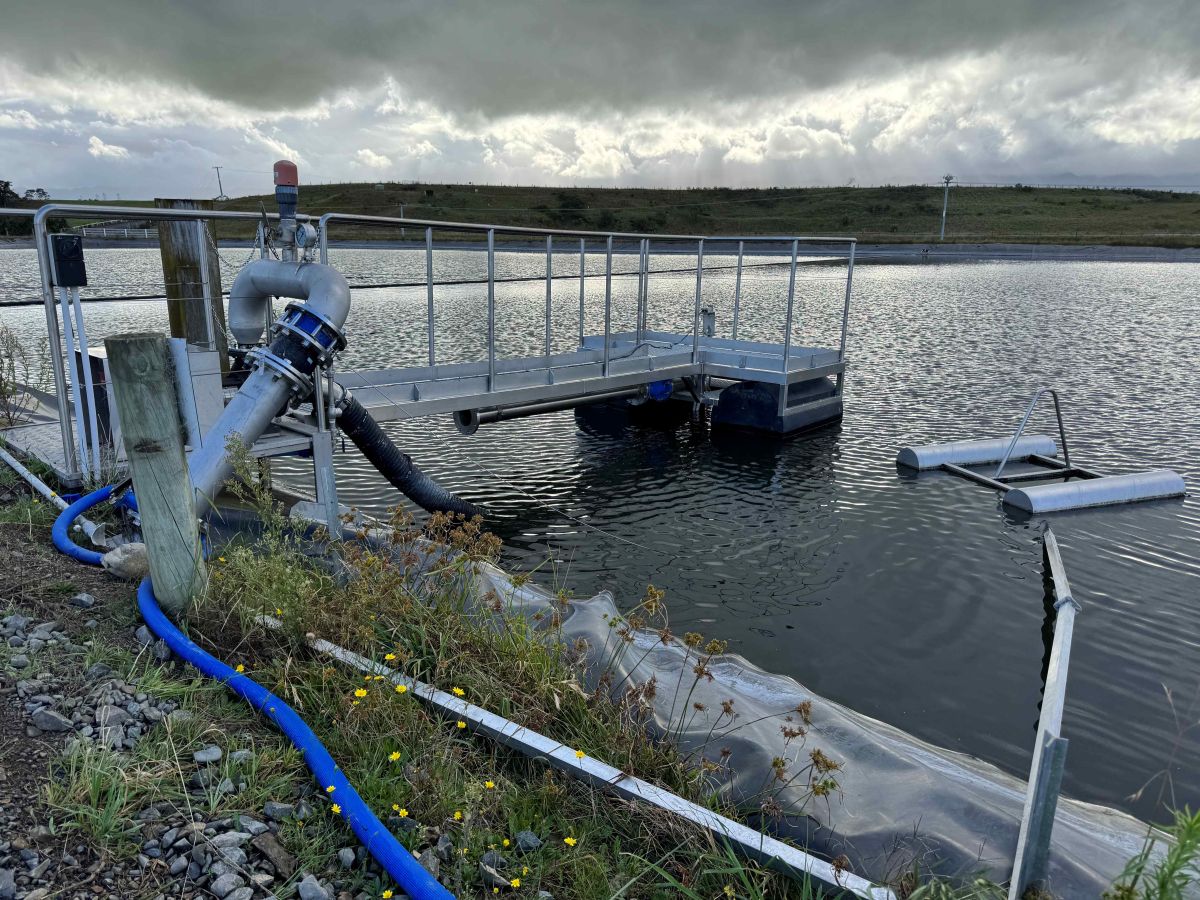
Dissolved air flotation intake point at pond 3
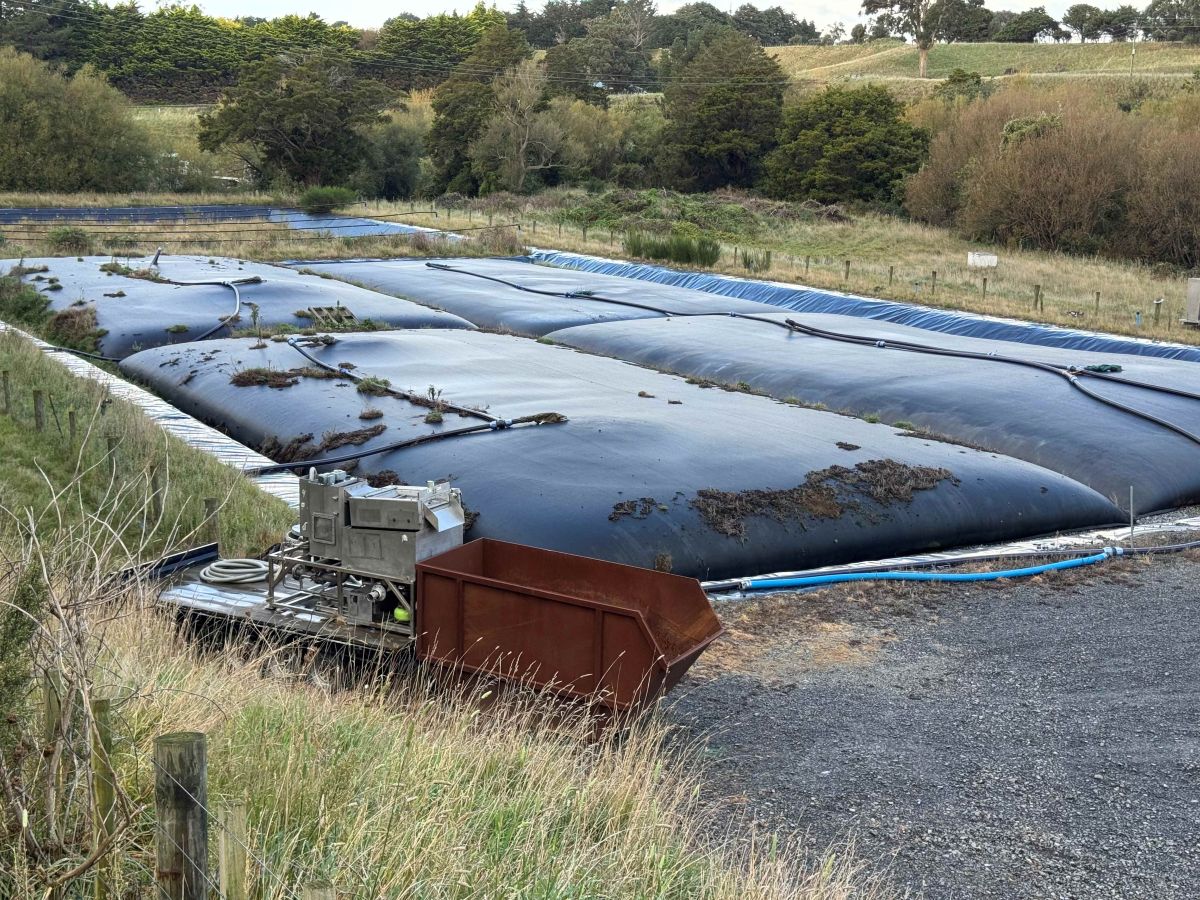
Wave press - sludge dewatering process
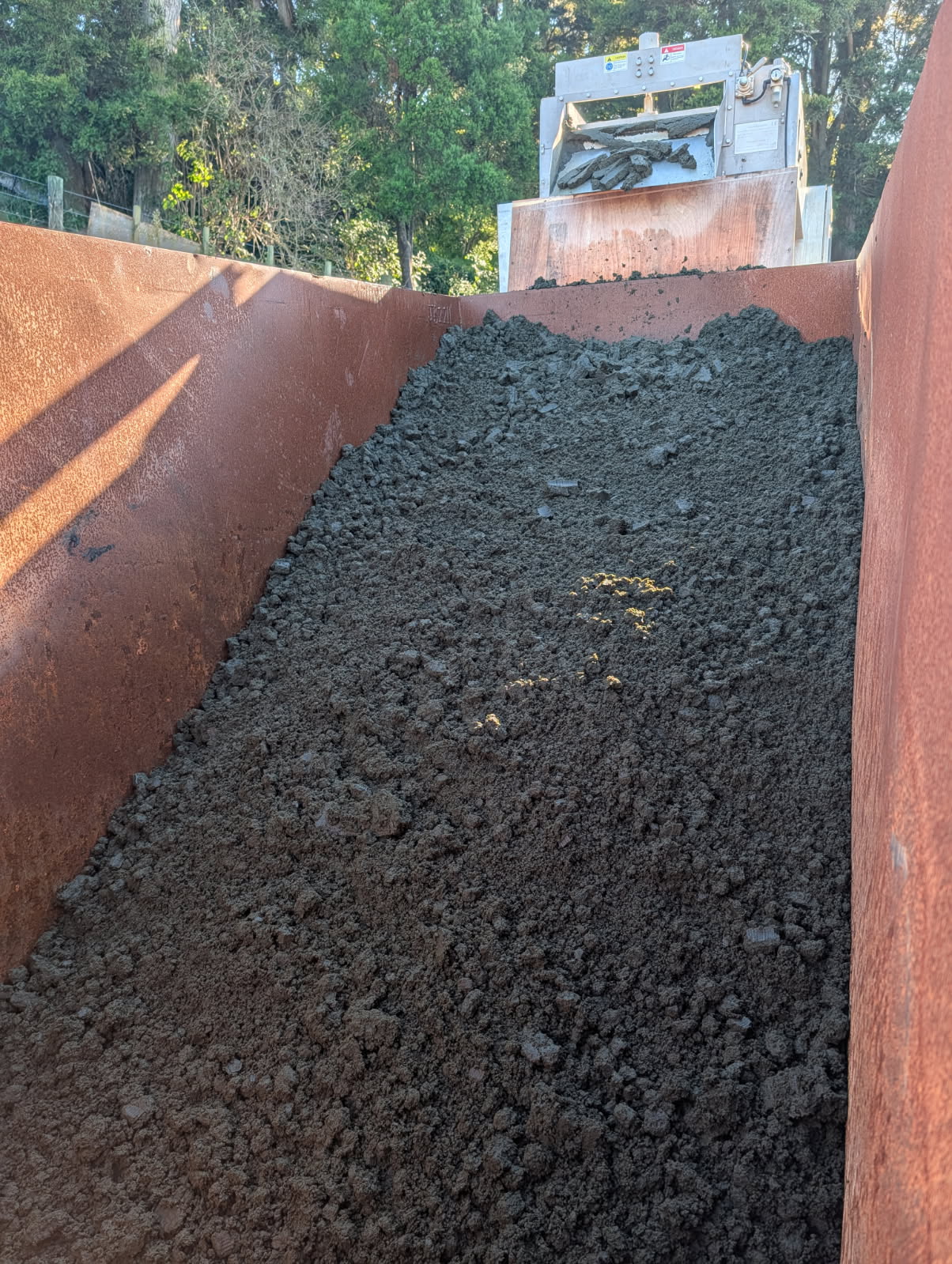
Dewatered sludge bin